

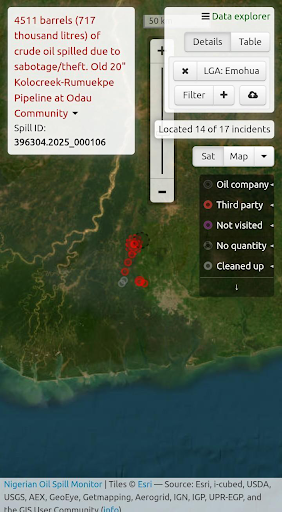
Oil spill records for Rumuekpe, Emohua LGA, from the NOSDRA Oil Spill Monitoring Site
By Ifeyinwa Francis
Friday Isiah was still young when oil pollution started affecting a community around Rumuekpe in Emohua Local Government Area of Rivers State. More than two decades later, the 33-year-old practising civil engineer still remembers what the community looked like before the pollution.
The vegetation was green, he said; residents could access the river, crops grew on the land, and farming and fishing supported many households.
Then the environment began to change. Trees started dying, fish disappeared from affected areas and vegetation gradually withered. Cassava, yam and other crops were destroyed as oil spread across parts of the land and water.
“Almost everything changed,” Friday told CSDI.
“Trees started dying. Fish started dying. The grass started dying. Everything was destroyed by the oil spill.”
The river, which residents depended on, was also affected. Friday added that the pollution made life difficult for people whose livelihoods depended on farming, fishing and the environment around them.
About a week later, officials whose identities were unknown visited the community and spoke to residents about the dangers associated with oil pollution. Friday said they assured residents that efforts would be made to restore the affected environment and help the community recover its water, vegetation and means of survival.
Young people, he said, were also promised alternative means of livelihood, although the support did not reach the people he knew.
Cleanup efforts followed the visit, according to Friday. With time, the visible oil disappeared from some affected areas, and some of the rivers became cleaner.
Years later, people returned to farming and fishing, while businesses gradually improved. Asked whether life had improved compared with the period when pollution affected the community, Friday said there had been progress.
According to EJAtlas, a Global Atlas of Environmental Justice and an online database that documents environmental conflicts worldwide, a major crude oil blowout occurred on Friday, 28th July 2002, at SPDC Well 3, spilling crude oil into Mgbuodo Village in the Rumuekpe clan of Emohua Local Government Area.
The spill polluted vegetation and water bodies, making farming difficult and deepening poverty. EJAtlas reports that it also prompted mobilisation by indigenous communities, farmers, fisherfolk and other groups through blockades, petitions, protests, collective action and media activism.
In a report published on August 28, 2015, Realnews Magazine reported spills along the Obagi–Rumuekpe oil export pipeline. According to the report, the Joint Investigation Visit (JIV), which monitored the oil spill, attributed the incident to third-party sabotage.
Years later, residents of Omoviri Rumuekpe raised similar concerns. On April 16, 2021, Daily Trust reported that an oil spill had polluted the community’s farmlands and river, disrupting farming and fishing and leaving residents without a safe source of drinking water. Residents also accused government agencies and oil companies of failing to identify the source or clean up the affected area.
Mrs Eberichi Sunday, a farmer in Rumuekpe whose husband is a fisherman, said that oil pollution had affected the community over the years, while the most recent spill she remembered occurred in 2019 during a bunkering explosion.
She said the incident affected farmlands, land and fish, disrupting activities that people depended on for their livelihoods.
When oil polluted farmlands and entered the water, crops were destroyed, and fishing became difficult. Some fish died, she said, while farming and fishing could no longer provide enough for some families to feed themselves.
People began looking for other ways to survive. Eberichi said some men went into building work, while others learned carpentry and other skills. She survived by doing manual labour.
Eberichi said she personally reported the pollution, while other residents also reported it. People later inspected the affected areas, but she could not identify the organisations they represented. She said residents were promised support during the visits, but the assistance never came.
“I just wasted my time,” she described the period she spent expecting help.
A review of NOSDRA’s publicly accessible Oil Spill Monitor found multiple records involving Rumuekpe-related pipelines and infrastructure in Emohua Local Government Area. The records span several years, from 2011 to 2024, and several are classified as confirmed incidents. Some records also contain dates and entries indicating follow-up activities.
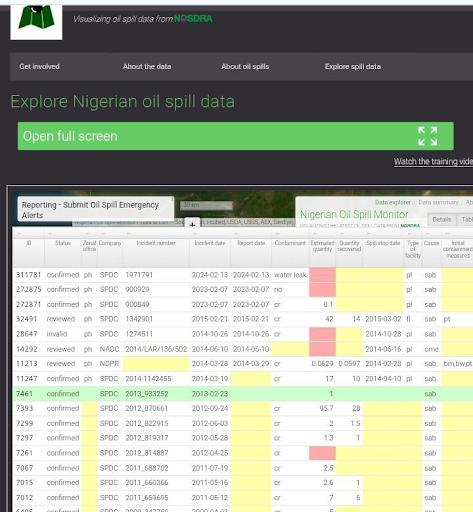
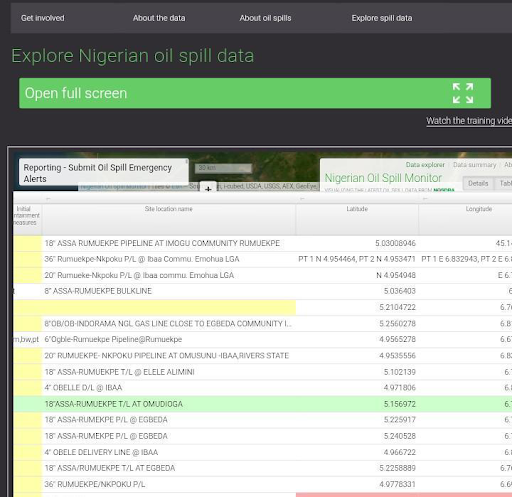
Screenshot of oil spill in Rumuekpe Emohua, from the NOSDRA monitoring site
However, apart from a 2014 entry marked ‘reviewed’, the database contains no confirmed record of cleanup or remediation for the Rumuekpe-related incidents from 2011 to 2024.
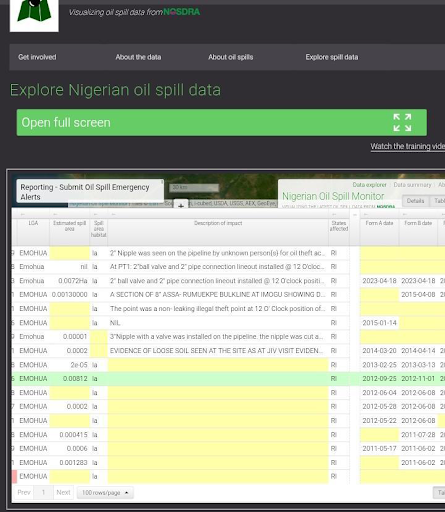
Screenshot of oil spill from NOSDRA database
NOSDRA was contacted by email on September 8, 2026, for clarification on the reported incidents, cleanup activities and available remediation records, but had not responded as of the time of filing this report.
Today, Mrs Eberichi said life has improved. Farmers can cultivate their land again, while her husband and other fishermen have returned to fishing.
However, she said she occasionally sees traces of oil on water around Owuta, particularly when the water level is low. She could not identify where the oil came from, and this investigation could not independently establish its source.
Oil Bunkering Explosion
On March 3, 2023, an explosion at a crude oil tapping point in the community killed at least 12 people. Reports documented the destruction of land and property that followed.
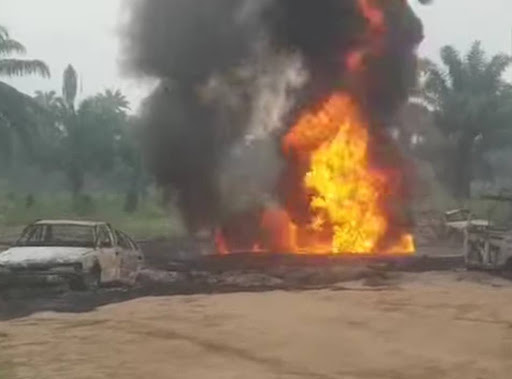
Oil Bunkering explosion in Rumuekpe, Emohua. Photo credit: Nigeria Info
On March 5, 2023, Vanguard reported that SPDC said a joint investigation found that the fire occurred at the site of an illegal connection used for crude theft on the Rumuekpe–Nkpoku Trunk Line.
Destiny David, a student who spoke with CSDI about illegal bunkering, said such activities had occurred repeatedly and claimed lives over the years.
According to her, some people who were initially engaged in other work later entered bunkering after hearing about the money they could make from it.

Destiny David
Destiny said explosions connected to illegal oil activities had also destroyed vehicles, property and vegetation. She recalled that security agencies and government officials visited during some spills and explosions.
She remembered that personnel from NOSDRA visited the affected areas and participated in cleanup activities during some incidents.
Rumuekpe recalled experiencing the consequences of illegal crude oil activities, which she said have contributed to oil spills and pollution in the area.
Expert’s View
CSDI spoke with Emmanuel Kilaso, Executive Director of the Securecycle Environmental and Climate Change Initiative, who said the effects of oil pollution can remain long after visible oil disappears.
Kilaso said that crude oil can interfere with the movement of water and oxygen through the soil and damage organisms that contribute to soil fertility, affecting agriculture long after a spill.

Emmanuel Kilaso
He stressed that fishing communities can face similar disruption when oil enters waterways and affects fish and their breeding environments. He said livelihoods can recover, but removing visible pollution is only part of the process.
“True recovery only happens when we couple scientific cleanup with direct economic support for the people, helping them survive the gap while the earth heals,” he said.
Kilaso added that communities should be able to demonstrate that soil, water and food are safe through independent testing, and recovery should be measured by whether households have regained stable livelihoods.
For Rumuekpe, those questions remain unresolved. Residents say life has improved, but they also remember promises of support that have never reached them. The condition of previously affected land and water, and the extent of cleanup and remediation carried out over the years, remain unclear.
She may be moving forward, but the full measure of its recovery is still difficult to establish.
This story was produced as part of the Liberalist Centre’s Journalism for Liberty Fellowship, with funding from Liberty International.