

From the Yoruba folktales of Ìjàpá to enduring myths about twins and persons with albinism, the stories we inherit often shape our beliefs long before we encounter the subject.
By Saheed Ibrahim
I grew up hating Ìjàpá – the tortoise.
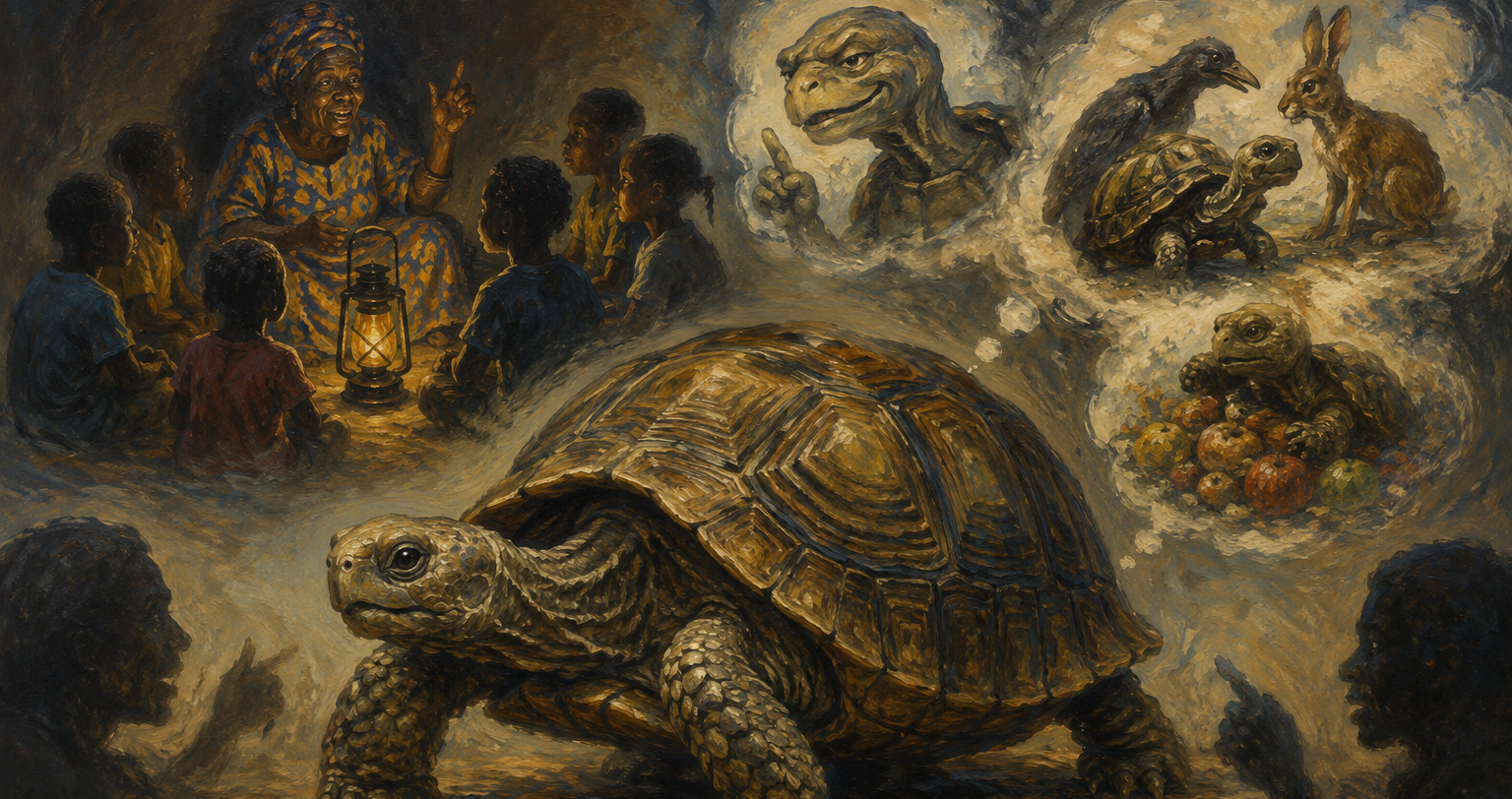
“Ìjàpá was greedy, sneaky and cunning,” my paternal grandma described the “slow-walking” animal on one of the many nights we sat around for her moonlight folktales.
Telling folktales to children at night has long been the practice in our home and in many Yoruba, probably African, homes. The storyteller, usually an elder such as a father, mother, grandmother, uncle or aunt, tells these tales informally, not just to entertain but to teach life lessons.
Among these tales, the stories about Ìjàpá dominate. Ìjàpá, his wife, his friends, the birds and the wider animal kingdom appear repeatedly.
There are collections of these stories, including Akójọpọ̀ Àlọ́ Ìjàpá (a collection of tortoise folktales) by the renowned Yoruba scholar Adebayo Babalola.
While some stories portray the tortoise as clever enough to survive tough situations despite his weaknesses, most of the ones I heard painted him as greedy, deceitful and selfish.
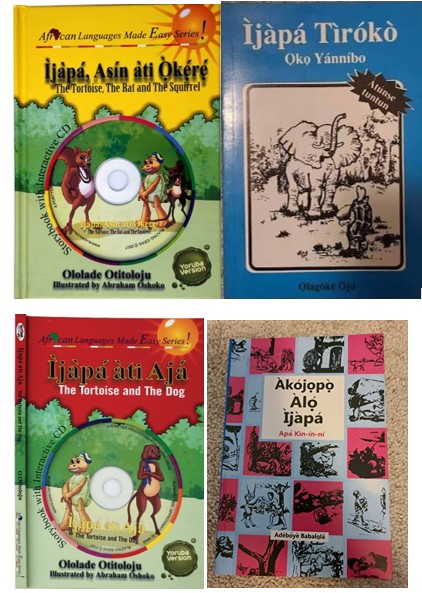
Samples of books on Ìjàpá’s folktales. Source: Google images
In “Folk Poetics: A Sociosemiotic Study of Yoruba Trickster Tales”, Ropo Sekoni describes Ìjàpá as a “secular trickster”, with Eshu as the sacred one.
Eshu is a Yoruba deity with several names, such as god of trickery, chance, crossroads, judgement and duality. Equating Ìjàpá with Eshu says a lot about how the animal is regarded, though Lawal, in “The Rhythm of Life: A Semiotic Study of Curvilinear Form in Yoruba”, calls this equation anomalous.
Storytellers used the tortoise to display the worst human vices: gluttony, theft, betrayal, arrogance and hyper-ambition. Children like me were meant to look at Ìjàpá’s behaviour and remember, “Don’t be like the tortoise.” That was how my grandma usually ended her folktales about him.
Children like me are meant to look at Ìjàpá’s terrible behaviour and remember:
“Don’t be like the tortoise.”
This was how my grandma usually ended her folktales about the animal.
Until my university days, when I visited a zoo and saw a tortoise for the first time, I never liked the animal because “I don’t want to be like it”.
But why the tortoise, of all animals?
As Prof. Olatunde Bayo Lawuyi puts it in his article “Is Tortoise a Trickster?”:
“I have read many of the books on the activities of this animal as represented in folktales. It is bad enough that many essays contain little or no analysis of the tales and therefore serve merely to document their existence. It is equally intriguing to note that the scholarly treatment of the tales presents the tortoise as a trickster when, for several reasons, there is little or no epistemological justification for it”
Now, I look at the “poor” animal and laugh. If it could hear or read the folktales about him, it would probably ask for a retrial, or better yet, ask us to hear its own side of the story.
The crux of this article is not about Ìjàpá but something else.
Stories!
Stories are powerful because they often serve as our first introduction to people, places, and even ideas.
Long before we have our own experiences, someone has already told us what to think.
Sometimes those stories help us make sense of the world.
Sometimes they quietly shape our prejudice, stereotypes, and disdain.
Like Ijapa, many of the people we judge badly today – families, tribes, religions, countries – are not carrying the sins we accuse them of. They are carrying a story someone else needed to tell for certain purposes.
For generations, myths about twins led to their rejection and killing in some communities. Innocent children suffered because stories convinced people they were symbols of misfortune.
People with albinism continue to face persecution in many communities because stories claim their body parts bring wealth or supernatural powers. Those stories have fuelled discrimination, violence and even murder.
That is what a poisoned story does. It doesn’t need malice to do damage. It only needs repetition without memory.
Frank Salamone, drawing on the scholar Ropo Sekoni, notes that kings or priests never told Ìjàpá tales. They were told by grandmothers, aunts and mothers – by the same people who had no real power of their own.
Sekoni describes these storytellers as the “nonhegemonic members” of the community, ordinary people using Ìjàpá as their megaphone.
So my grandma wasn’t lying to me about Ìjàpá’s character. She was doing what generations of storytellers before her did – using the animal’s cracked shell, retracting head and short legs to smuggle in a bigger truth about power, struggle and who gets to win.
The problem was never that she told the story. The problem is what happens after a story is told enough times without anyone asking why it was told in the first place.
Stories usually survive. The reason for it may not.
The context becomes lost. The character becomes the caricature, and somewhere along the line, we begin to see people as the stories we hear about them.
Nigerian novelist Chimamanda Ngozi Adichie captures this in her popular TED Talk, “The Danger of a Single Story”. She argues that repeatedly hearing only one narrative about a person, community, or country reduces them to a stereotype.
Sometimes all it takes is hearing the same story often enough for it to become what we assume is the truth.
That is why the stories we tell matter.
Stories shape perception. Perception influences attitude, and attitude drives action.
Perhaps that explains why I disliked the tortoise before I had ever seen one.
Perhaps it also explains why some people fear, distrust or even hate others they have never met.
Someone told them a story
Today, we inherit stories about ethnic groups, religions, professions, migrants, politicians and entire communities long before we ever meet them ourselves.
So, the next time you hear a story about a person or people, especially one that fits too neatly into a lesson, you need to ask, “What is this story actually for, and who does it serve?
Because if we don’t ask, the story keeps walking long after the truth has gone home to sleep.